


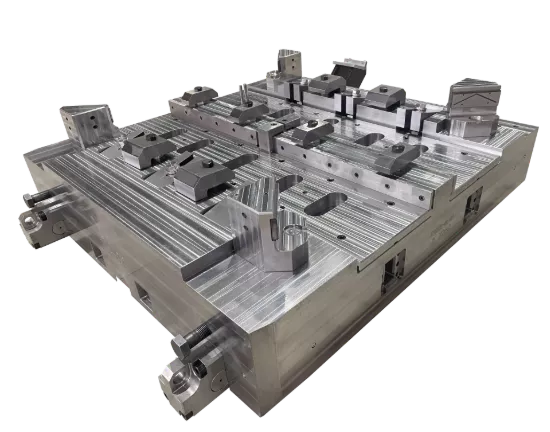
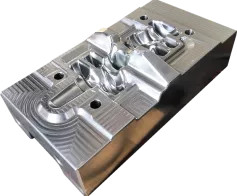
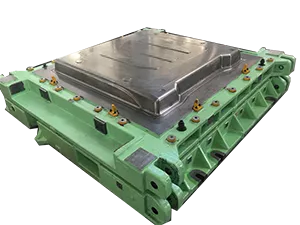
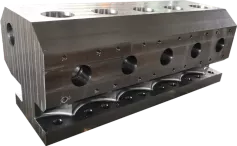
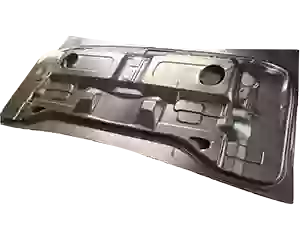
Hochpräzise Warmumformwerkzeuge für die Automobil- und Luftfahrtindustrie
Release time: 2026-02-24
Inhaltsverzeichnis
Aluminum alloy forging dies are specialized tooling systems used to manufacture high-strength aluminum forgings for demanding industrial applications. From automotive engine components to aerospace structural parts, these dies play a decisive role in ensuring dimensional accuracy, mechanical strength, and production efficiency.
As industries continue shifting toward lightweight and high-performance materials, aluminum alloy forging dies have become essential in modern manufacturing.

What Are Aluminum Alloy Forging Dies?
Aluminum alloy forging dies are precision-engineered molds used in hot forging processes to shape heated aluminum billets into specific geometries under high pressure. These dies withstand extreme temperature, force, and repeated impact during production.
The forging process typically involves multiple stages:
- Roll forging die
- Pre-forging die
- Final forging die
- Edge trimming (cutting) die
Through controlled deformation in successive die cavities, the aluminum material flows into the required shape, producing dense, high-strength forged components.
Why Aluminum Alloy Forgings Are in High Demand
Aluminum alloys offer a unique combination of:
- Lightweight properties
- High strength-to-weight ratio
- Excellent corrosion resistance
- Good thermal conductivity
- Recyclability
These characteristics make aluminum forgings ideal for industries focused on energy efficiency and structural optimization.
Key Applications of Aluminum Alloy Forging Dies
Automotive Industry
Automotive manufacturers such as Toyota and Ford Motor Company increasingly rely on aluminum forgings to reduce vehicle weight and improve fuel efficiency.
Common forged components include:
- Engine cylinder blocks
- Cylinder heads
- Pistons
- Connecting rods
- Steering knuckles
- Control arms
- Wheel hubs
Aluminum forging dies must ensure high dimensional precision and consistent mechanical performance under mass production conditions.
Aerospace Industry
Aerospace companies like Boeing require lightweight yet structurally strong components. Aluminum forgings are widely used for:
- Structural brackets
- Frame connectors
- Landing gear components
- Aircraft fittings
Forging dies for aerospace applications demand extremely tight tolerances, advanced material control, and rigorous quality inspection.
Electronics & Machinery
Aluminum forgings are also used in:
- Heat dissipation components
- Structural frames
- Precision mechanical parts
Forging dies in these sectors must maintain consistent cavity accuracy and surface finish quality.
Structure of Aluminum Alloy Forging Dies
A complete aluminum forging die system typically includes several stages to ensure optimal metal flow and final geometry accuracy.
1. Roll Forging Dies
Roll forging improves billet distribution and preforms the material before entering the main die cavity. It enhances material utilization and reduces defects.
2. Pre-Forging Dies
Pre-forging shapes the material closer to its final form, ensuring proper metal flow during final forging.
3. Final Forging Dies
The final forging die determines the exact geometry, tolerance, and surface finish of the finished component.
4. Edge Trimming Dies
After forging, excess flash material is removed using trimming dies to achieve the final part profile.
Each stage contributes to improved mechanical properties and reduced internal defects.
Materials Used in Aluminum Alloy Forging Dies
Forging dies must withstand:
- High temperature exposure
- Repeated mechanical impact
- Friction and wear
- Thermal fatigue
Common die materials include:
- H13 hot work tool steel
- H11 tool steel
- High-performance alloy tool steels
These materials are selected for their high hardness, thermal stability, and resistance to cracking.
Heat treatment and surface treatments such as nitriding are often applied to enhance die lifespan and wear resistance.
Why Tooling Quality Determines Your ROI
Choosing a low-cost forging die may increase:
- Thermal cracking risk
- Die wear rate
- Production downtime
- Scrap percentage
- Maintenance frequency
Our aluminum alloy forging dies focus on:
✔ Extended die lifespan
✔ Optimized heat resistance
✔ Balanced hardness and toughness
✔ Stable mass production performance
For high-volume automotive and aerospace projects, tooling stability directly affects profitability.
Technical Capabilities
We support:
- Aluminum alloy grades: 6061, 7075, 6082, etc.
- Hot forging temperature control
- High-tonnage forging compatibility
- Complex geometry cavity machining
- Surface treatment for wear resistance
Advanced CNC machining centers and precision inspection equipment ensure tight tolerances.
Common Challenges We Solve
Thermal Fatigue Cracking
Through optimized steel selection and heat treatment.
Uneven Metal Flow
Using advanced simulation and cavity optimization.
Excessive Die Wear
With nitriding and surface strengthening processes.
Flash Control Issues
By precision groove design and trimming optimization.
Why Choose Us as Your Aluminum Forging Die Partner?
✔ Engineering-focused team
✔ Experience in automotive & aerospace tooling
✔ Complete in-house machining capability
✔ Transparent project management
✔ Fast response for technical discussions
✔ Long-term cooperation mindset
We do not just manufacture dies — we optimize forging systems.
Request a Custom Aluminum Alloy Forging Die Quote
If you are looking for:
- Aluminum forging die manufacturer
- Hot forging die supplier
- Automotive aluminum forging tooling
- Aerospace aluminum forging die factory
- Custom multi-stage forging dies
Our engineering team is ready to evaluate your project.
📩 Send us your 2D/3D drawings today for technical review and quotation.
We provide DFM feedback before production begins.
Frequently Asked Questions
What is the typical lifespan of an aluminum forging die?
Depending on material and production conditions, properly designed dies can handle tens of thousands to hundreds of thousands of forging cycles.
What die material is best for aluminum hot forging?
H13 and H11 hot work tool steels are commonly used due to their high thermal fatigue resistance.
Can forging dies be customized?
Yes. All aluminum alloy forging dies are engineered based on part geometry, alloy type, and production volume.
What affects forging die cost?
Complexity, cavity size, material grade, heat treatment requirements, and surface treatments all influence tooling cost.
If your project requires durable, high-accuracy aluminum alloy forging dies, partner with a manufacturer that understands material behavior, thermal stress, and production economics.
👉 Contact our engineering team now to discuss your aluminum forging die project.

