

The Evolution of Forging Mold Frames for the New Energy Vehicle (NEV) Parts Production
Release time: 2026-01-27
Table of Contents
The global shift toward sustainable transportation has placed the New Energy Vehicle (NEV) industry at the center of manufacturing innovation. To extend battery range and enhance vehicle performance, the demand for lightweight yet ultra-strong components is surging. This transition has fundamentally changed the requirements for precision forging mold frames, driving the evolution of tooling technology to support complex EV architectures.
Adapting to Lightweighting: The Rise of Aluminum Forging Die Sets
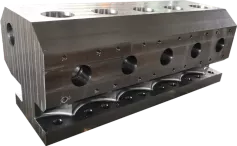
One of the most significant trends in NEV production is “lightweighting.” Traditional steel components are increasingly being replaced by high-strength aluminum alloys, particularly for chassis and suspension parts. Consequently, advanced aluminum forging die sets must now handle unique thermal expansion properties while maintaining extreme dimensional stability.
For B2B manufacturers, investing in a high-thermal-stability mold frame is no longer optional. These frames ensure that aluminum workpieces—which are more sensitive to temperature fluctuations than steel—are forged with zero defects, maintaining the integrity of critical EV structural parts.
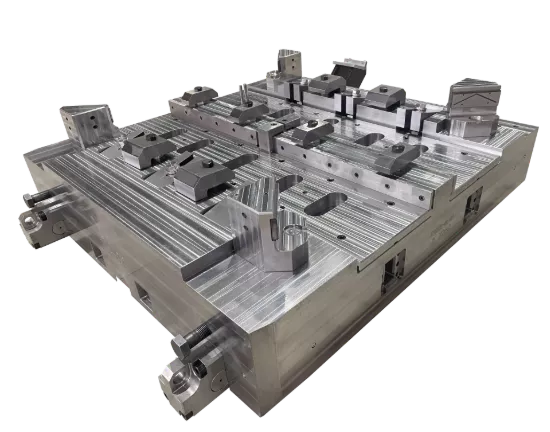
[Image suggestion: A high-precision forging die set for EV motor shafts or aluminum suspension arms]
Core Technical Drivers: What NEV Parts Manufacturers Seek
When sourcing from a professional NEV forging mold supplier, procurement teams are looking for “Core + Attribute” combinations that guarantee a competitive edge in the EV supply chain:
High-Cycle Fatigue Resistance: NEV parts often require mass production with high consistency. A long-service-life forging die base made from premium H13 or customized tool steel reduces the frequency of mold changes, directly lowering the “cost per part.”
Flashless Precision Forging: To minimize material waste, 2026’s industry standards favor flashless forging mold frames. This technology allows for “near-net-shape” production, which is crucial for intricate EV motor shafts and rotor components where post-machining must be kept to a minimum.
Smart Tooling Integration: Modern automated forging mold systems are now equipped with sensor-ready frames. These “smart” frames allow for real-time monitoring of pressure and temperature, ensuring that every forged NEV component meets rigorous safety standards.
Choosing the Right Partner in the EV Supply Chain
The complexity of EV components, such as battery pack housings and high-torque gears, requires a specialized NEV tooling factory that understands both metallurgy and electrical vehicle requirements.
Integrated Design Services: Seek a customized EV forging mold manufacturer that offers simulation software (FEA) to predict metal flow before the frame is even built.
Global Compliance: Ensure your ISO-certified forging mold exporter understands the international quality standards required by top-tier EV OEMs (Original Equipment Manufacturers).
Rapid Prototyping: In the fast-paced NEV market, a quick-turnaround forging die supplier can be the difference between hitting a vehicle launch deadline or falling behind the competition.
Conclusion: Engineering the Future of Mobility
The evolution of forging mold frames is intrinsically linked to the success of the New Energy Vehicle era. By prioritizing high-precision EV die frames and adopting innovative forging tool solutions, B2B enterprises can secure their position in the lucrative green energy supply chain, delivering parts that are lighter, stronger, and more efficient than ever before.